Phone Battery Replacement in the UK: A Practical Guide
[Repair_All brand="Apple"]You're halfway through an important call, navigating with Google Maps or waiting for a banking code, and your phone suddenly drops from a comfortable charge to almost nothing. Perhaps it's been running hot in your pocket, charging more slowly, or switching off while the battery indicator still suggests there's plenty left.
That frustration usually isn't solved by closing background apps or lowering screen brightness. If the lithium-ion cell has physically aged, phone battery replacement is often the sensible repair, not an unnecessary upgrade. This guide explains how to recognise a failing battery, compare UK repair prices, understand the workshop process, and judge whether your handset deserves a new cell or a place in the recycling stream.
Table of Contents
- Is It Time for a Phone Battery Replacement
- Warning Signs Your Phone Battery Is Failing
- UK Battery Replacement Costs Compared
- How the Battery Replacement Process Works
- Testing and Quality Checks That Matter
- Repair or Replace Your Phone
- Safety, Disposal and Warranty After Replacement
Is It Time for a Phone Battery Replacement
A phone battery does not become “old” in the same way a case gets scratched. Its lithium-ion cell gradually loses the amount of energy it can store and deliver. Every charging cycle contributes to that wear, while heat, heavy use and age can make the decline more noticeable.
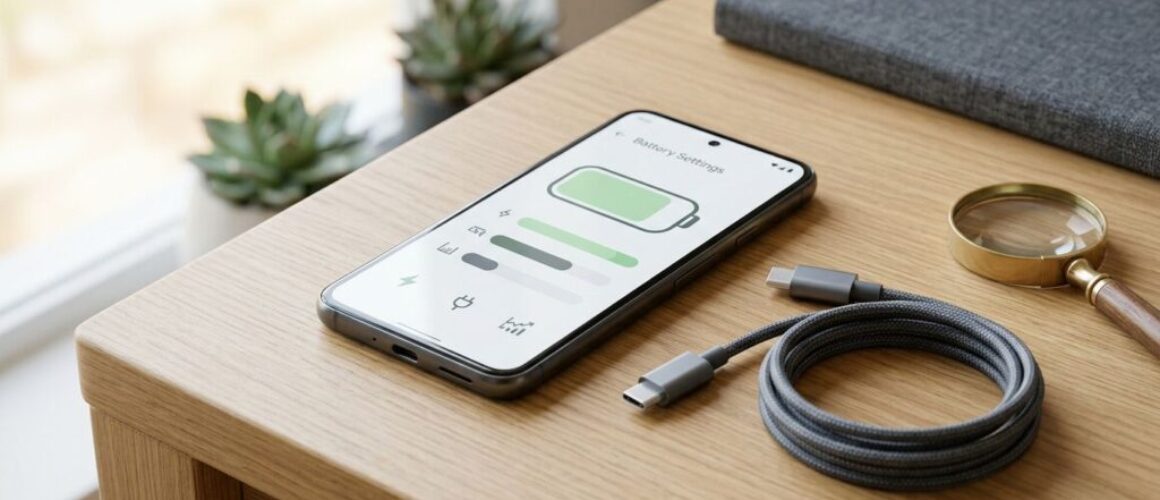
Your phone's battery-health reading is an estimate based on measurements taken by the battery-management system. It isn't a complete laboratory test. A device can show an apparently acceptable figure while still struggling to supply power when the processor, camera, mobile modem or display suddenly demands more current.
Apple gives UK iPhone owners a useful reference point. Under AppleCare, Apple says a battery is eligible for replacement at no extra charge when its maximum capacity falls below 80%, and says a normal battery should retain up to 80% of its original capacity after 500 complete charge cycles under normal conditions. You can check battery health and related information in iPhone Settings through Apple's UK AppleCare battery guidance.
That threshold isn't a magic point at which every phone becomes unusable. It's a practical sign that the cell has lost enough capacity to affect daily reliability. You may notice shorter runtime, unexpected shutdowns, reduced performance under load or more aggressive battery warnings. Some phones also limit performance or display brightness when the battery can't deliver stable voltage.
A practical decision rule
Start with the phone's reported health, then compare it with what the phone does. If the reading is poor and runtime has clearly fallen, the case for replacement is strong. If the reading looks normal but the handset still drains quickly, a technician should also check the charging port, software activity and power-management system.
Workshop rule: A battery replacement should solve a battery problem. It shouldn't be used to disguise a faulty charger, damaged charging port or board-level fault.
Two or more persistent symptoms from the next section usually justify a proper diagnostic. Don't wait for the handset to become completely unusable. A phone that still turns on is easier to back up, test and repair than one that has begun shutting down without warning.
Warning Signs Your Phone Battery Is Failing
The most useful clue is not one isolated percentage. It's the pattern created by runtime, charging behaviour, temperature and shutdowns.

What each symptom usually means
Rapid percentage drops often mean the battery meter is estimating remaining charge from a cell whose usable capacity has faded. The number may look reassuring at first, then fall sharply during camera use, navigation or a mobile-data session.
Unexpected shutdowns are more serious than ordinary fast drain. An aged cell can suffer voltage sag when the processor or radio works hard, causing the phone to trigger its low-battery protection even while the indicator still shows charge. Shutdowns during gaming, video recording or navigation point more strongly to a weak cell than a shutdown while the phone is idle.
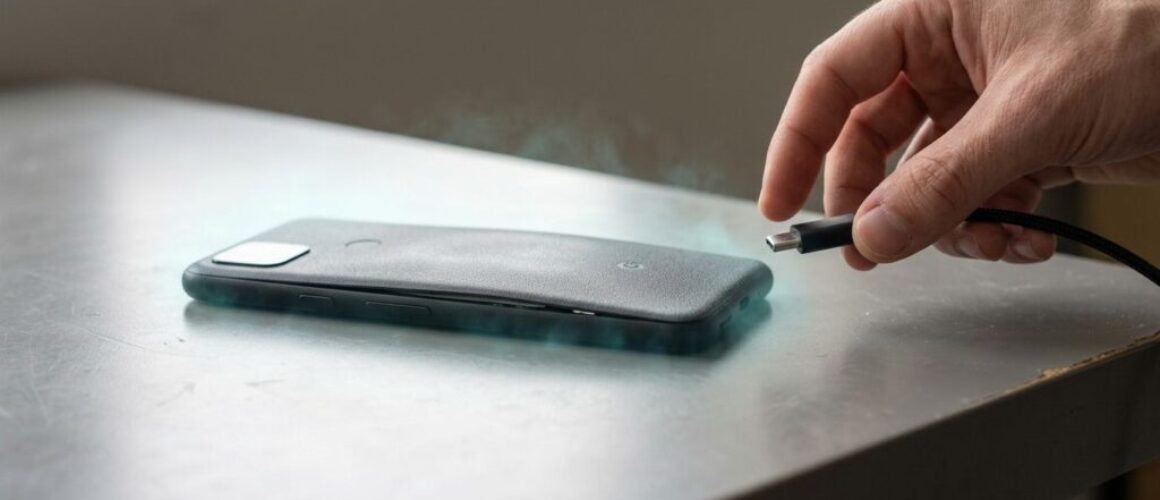
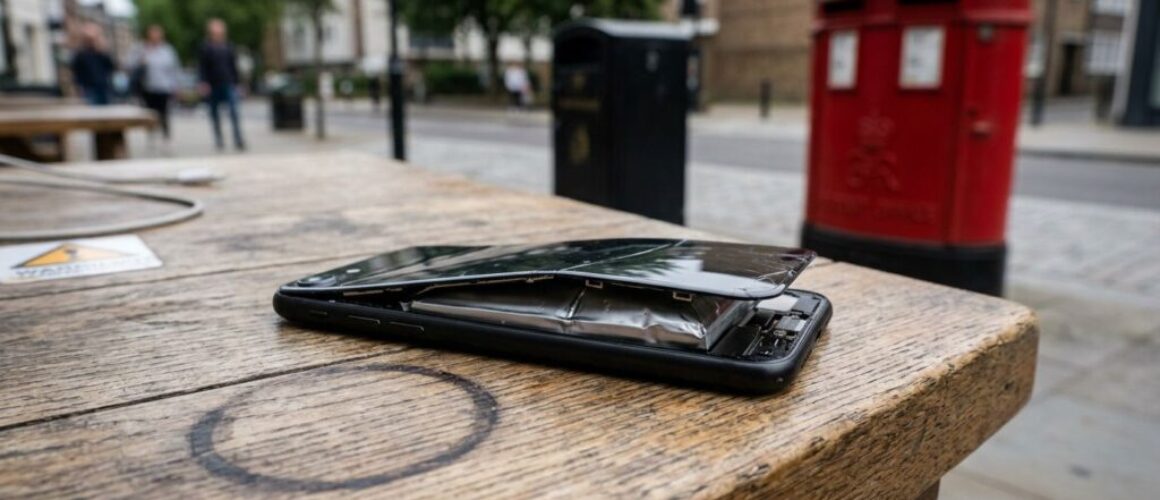
A lifted screen or bulging back indicates possible swelling. Stop pressing the screen back into place, don't puncture the phone and don't continue charging it. Move it away from heat and arrange specialist advice. A swollen lithium-ion battery is a safety issue, not a minor cosmetic fault.
Slow charging or a phone that refuses to reach full charge can come from the battery, cable, charger or port. Try a known-good charging setup before booking. If several reliable chargers behave the same way, the battery and charging circuit need testing.
Heat during light use deserves attention. A phone that becomes hot while idle, messaging or charging may be wasting energy through internal resistance, a software process or another component fault. Heat can accelerate further battery wear, so repeated overheating shouldn't be ignored.
Apple explains that genuine iPhone batteries work with iOS to report charge levels and battery health properly. Its iPhone battery and performance support information also explains where users can view battery details such as capacity and cycle count.
Run this check before booking
- Compare the reading with reality: Note the battery-health figure, then consider whether the phone still lasts through the same routine it once handled comfortably.
- Observe the trigger: Record whether shutdowns happen during navigation, photography, gaming or other demanding tasks, rather than at idle.
- Rule out accessories: Test a known-good cable, plug and wireless charger if the phone supports one.
- Look for physical change: Check for a lifted display, gaps around the frame, a rocking phone on a flat surface or unusual warmth.
- Check for a second fault: If the phone remains hot while unused or drains rapidly overnight, ask for a software and charging-system diagnostic as well as a battery test.
For a practical walkthrough of the iPhone settings, use this guide to check iPhone battery health. A technician should confirm the fault rather than replacing a battery solely because an app has produced an alarming reading.
UK Battery Replacement Costs Compared
UK battery replacement pricing depends on the phone, the adhesive and opening method, the part selected, and whether the repairer provides post-repair testing. An authorised service centre may offer manufacturer processes and parts, while an independent workshop can often provide a quicker or more flexible service. Neither label alone proves that the repair is good. Ask what part is fitted, how the device is resealed and what the warranty covers.
Which's UK repair-cost guidance gives a useful real-world comparison. Apple will replace an iPhone 17 battery for about £95, while independent shops typically charge around £70 to £100. Samsung's listed replacement price for a Galaxy S25 battery is £59, while third-party repairs are around £40, as reported in Which's UK mobile phone repair cost guide.
| Model | Authorised Service | High-Street Chain | Specialist Independent |
|---|---|---|---|
| iPhone 17 | About £95 | Varies by chain | Around £70 to £100 |
| Samsung Galaxy S25 | £59 | Varies by chain | Around £40 |
| Older iPhone models | Quote required | Quote required | Quote required |
| Samsung Galaxy A series | Quote required | Quote required | Quote required |
| Google Pixel models | Quote required | Quote required | Quote required |
What you're paying for
Authorised service is attractive when device history, manufacturer processes or AppleCare eligibility matters. Independent repairers can be a sensible choice when they provide clear diagnostics, documented testing, suitable replacement parts and a written warranty.
Prices can vary between London, major UK cities, local high-street shops and postal services. Older or less common phones may cost more when parts are harder to source, while glued designs can require more careful opening and resealing. Don't compare the headline figure alone. Compare the battery specification, diagnostic policy, turnaround, data handling, resealing method and remedy if the replacement performs poorly.
For model-specific guidance, use this UK iPhone battery replacement cost guide. A transparent quote should identify the exact model and state whether labour, adhesive, testing and warranty are included.
How the Battery Replacement Process Works
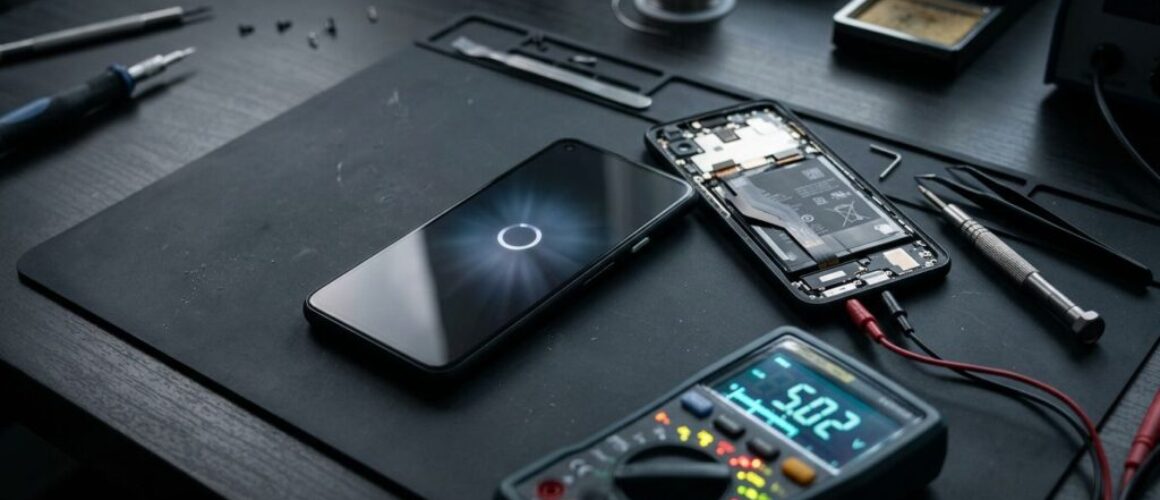
A proper repair starts with diagnosis, not a screwdriver. The technician should confirm that the battery is causing the symptoms and check for related problems such as a damaged charging port, liquid exposure or abnormal software drain.

Postal repairs
The usual sequence is straightforward:
- Book the exact device: Choose the brand, model and battery service, then read the packing instructions carefully.
- Prepare the handset: Back up important data, remove accessories and follow the repairer's instructions for passcodes or device access.
- Send it securely: Use protective packaging and tracked transport. The phone shouldn't move freely inside the parcel.
- Confirm the fault: The workshop checks the reported symptoms and tests the battery before opening the handset.
- Open and disconnect: The technician uses the correct heat and separation method, removes the screen or back cover where required, and disconnects the battery before working further.
- Extract and fit: The old cell is released carefully, the connector and surrounding area are inspected, and the replacement is installed with fresh adhesive.
- Test and return: The phone is reassembled, checked, packed securely and sent back through tracked delivery.
A postal route makes sense when there's no convenient local specialist or when you can manage without the phone during transit and repair. Ask how the device is insured, what happens if the diagnostic finds a different fault, and whether the return shipment is tracked.
Walk-in repairs
An appointment-based repair follows the same technical principles but removes the postal wait. The technician records the phone's condition, confirms the battery fault, opens it on a suitable work surface and completes the replacement before carrying out charging and function checks.
Some common models can be completed during a short appointment, but the exact time depends on adhesive, model design, part availability and any damage discovered during opening. Don't book based on a guaranteed short turnaround if the phone has a lifted screen, bent frame or previous repair damage.
The final quality-control stage checks charging, battery reporting, display, touch, cameras, speakers, biometric functions and connectivity. The handset shouldn't leave the workshop just because it powers on.
Testing and Quality Checks That Matter
A battery swap is not automatically a quality repair. The difference appears in what the workshop measures after fitting the cell and how it records the result.
A competent technician should compare the replacement's stated capacity with its measured behaviour, confirm that the phone accepts charge normally and watch for abnormal heat. They should also check whether iOS or Android reports battery information sensibly after the repair. A phone can boot successfully while still having a poor-quality cell, a damaged connector or a battery-management error.
The checks I expect to see
- Capacity verification: The replacement is assessed against its stated specification rather than accepted because it turns the phone on.
- Charge behaviour: The technician checks that charging begins reliably, progresses normally and doesn't create excessive heat.
- Load response: The handset is observed during demanding use so voltage instability doesn't remain hidden.
- Software reporting: Battery percentage and health information are checked after installation. Where the device requires it, the battery-management system is reset or recalibrated using the manufacturer-appropriate process.
- Whole-device function: Touch, display brightness, cameras, microphones, speakers, mobile signal, Wi-Fi, Bluetooth and biometric features are tested after reassembly.
- Repair record: The battery details, test outcome and warranty information are attached to the customer record.
A full drain and uninterrupted charge may be appropriate for calibration on some devices, but it shouldn't be treated as a cure for a physically worn or defective cell. Nor should a technician promise that calibration can restore a battery that has already lost meaningful capacity.
| Test | Basic Swap Shop | Full Quality Workshop |
|---|---|---|
| Battery connection | Confirms the phone powers on | Checks connector seating and charging response |
| Capacity | Relies on the part label | Verifies the replacement against its stated specification |
| Thermal behaviour | May not assess it | Observes heat during charging and demanding use |
| Software reporting | Checks the percentage briefly | Confirms battery telemetry and health reporting |
| Device functions | Tests only basic startup | Tests key hardware after resealing |
| Records | Gives a receipt | Records repair details and warranty evidence |
Ask whether the workshop uses documented quality checks and what happens if the new battery shows abnormal drain. The cheapest swap is a false economy if nobody proves that the replacement behaves properly.
Repair or Replace Your Phone
For most modern iPhones, Samsung Galaxy phones and Google Pixel devices with a healthy screen and working main board, I'd repair the battery before replacing the handset. A battery is a contained fault. Buying an entirely new phone to solve it creates migration work, additional cost and a device that may offer little practical improvement for your everyday use.
The decision becomes clearer when you separate the battery from the rest of the phone. A handset with a sound display, reliable charging port, working cameras and ongoing security support has useful life left. A handset with board damage, liquid damage, severe frame distortion or several unrelated faults is a different proposition.
Which reports that 87% of smartphone owners who repaired their device were satisfied with the result, based on its UK survey coverage in Which's repair and longevity article. The same source reports that the share of people replacing phones every one to two years fell from 20% in 2023 to 17% in 2025, suggesting that keeping a working device for longer is becoming a more relevant consumer choice.
My repair decision framework
| Factor | Favours Repair | Favours Upgrade |
|---|---|---|
| Battery | The phone's main fault is short runtime or shutdowns | The battery is only one of several serious faults |
| Software | The handset still receives relevant security support | Support has ended and essential apps are becoming difficult to use |
| Physical condition | Screen, frame and back are sound | Severe damage makes further opening risky or uneconomical |
| Performance | Speed, storage and camera quality still meet your needs | The phone no longer handles your normal work |
| Cost | The quoted battery repair is modest compared with a suitable replacement | The repair total approaches the cost of a comparable handset |
| Data and setup | You'd rather keep your apps, settings and eSIM in place | You need newer hardware features or a different form factor |
Apple's 80% battery-capacity threshold is a useful reference, but it isn't the only decision factor. An iPhone newer than the XR with a healthy main board and screen is usually a battery-repair candidate, provided it still meets your needs. The same logic applies to an Android phone that remains on active security updates.
Upgrade when the handset is past its useful support life, has a known board fault or needs multiple expensive repairs. Do not upgrade just because the battery has become inconvenient. Get the battery diagnosed, obtain a written price, and compare that figure with the cost of a truly suitable replacement rather than the cheapest new phone on a shop shelf.
Safety, Disposal and Warranty After Replacement
The old battery doesn't belong in a kitchen bin, general waste sack or drawer. Lithium-ion cells can catch fire when crushed, punctured, shorted or exposed to unsuitable handling. A professional workshop should isolate the removed cell, protect its terminals and send it through an appropriate recycling route.
UK guidance says portable batteries, including mobile-phone batteries, should go to a collection point rather than household rubbish. The guidance also recommends taping lithium battery terminals where practical to reduce fire risk. Retailers and distributors that sell or supply 32kg or more of portable batteries each year must offer free takeback under the relevant UK rules, as explained in this UK battery waste and supplier responsibility guidance.
For damaged or swollen cells, take extra care. The North London Waste Authority battery safety guidance warns that lithium-ion batteries can catch fire if damaged or wet and directs people towards designated recycling points. Don't post a swollen battery through ordinary mail, don't pierce it and don't leave it charging while you decide what to do. Contact a repairer or recycling service first and explain its condition.
What a useful warranty should cover
A meaningful battery warranty should explain whether it covers the replacement cell, workmanship or both. It should also tell you how to report abnormal drain, charging failure, inaccurate battery reporting or an early return of the original fault.
Keep the receipt, repair date, model details and any diagnostic record. Register the warranty if the repairer provides that option, and contact the provider promptly if performance changes. A warranty normally won't cover damage caused by later tampering, liquid exposure after repair or incompatible charging equipment, so ask for the exclusions before approving the work.
The UK phone repair warranty information should be easy to understand, not hidden behind vague promises. A trustworthy repairer will explain what was fitted, what was tested and what remedy is available if the replacement doesn't perform as expected.
If your iPhone, Samsung Galaxy or Google Pixel is draining rapidly, shutting down or showing signs of battery wear, Phone Repair Direct offers UK-wide tracked mail-in repairs and appointment-based drop-in service at its Harlow workshop. Book a diagnostic first so the workshop can confirm that the battery is the actual fault, then choose a tested replacement with documented quality checks and eligible warranty cover.