Back Glass Replacement iPhone: A Complete UK Guide
[Repair_All brand="Apple"]You've got the phone on the table, the back is spiderwebbed, and every time you pick it up you feel a few loose shards under your thumb. The screen still works, the battery still holds charge, but the rear panel doesn't feel safe anymore. That's the point where a back glass replacement iPhone repair stops being a cosmetic fix and starts becoming a decision about safety, cost, and how long you want to keep the handset.
For a lot of people, the hardest part is not the crack itself, it's working out whether the phone needs a simple glass repair, a full housing repair, or replacement altogether. The right answer depends on the exact model, the repair route you choose, and what you want protected, your data, your resale value, and the phone's day-to-day usability. If you're standing there with a cracked rear panel right now, this guide is meant to give you the same calm, practical overview I'd give at the counter.
Table of Contents
- Should iPhones Even Need Back Glass Replacement
- Why Modern iPhones Use Bonded Rear Glass
- How a Quality-Controlled Back Glass Replacement Works
- iPhone Models and the Back Glass Repair Methods That Fit Them
- AppleCare, Network Insurance or Private Repair
- Repair Versus Replace and Why It Is Not Always Obvious
- What a Good UK Repair Service Should Actually Do
- Getting Your iPhone Back Safely and What Comes Next
Should iPhones Even Need Back Glass Replacement
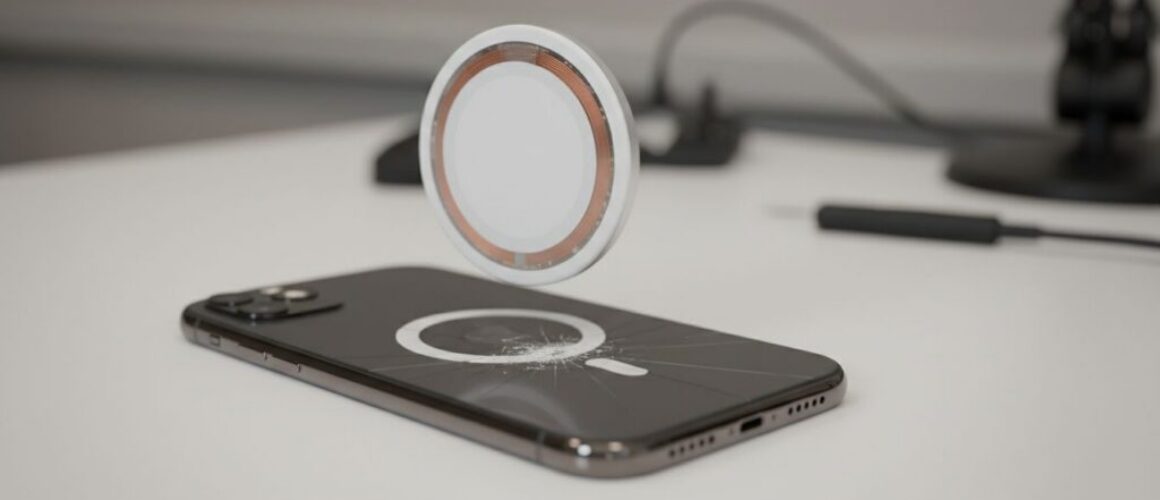
A cracked rear panel feels minor until you run your finger across it and catch a sharp edge. On newer iPhones, that damage can also make the phone wobble on a desk, throw off the feel of wireless charging, and leave you wondering whether the crack is only cosmetic or something more serious. In the UK, that question matters because iPhones are everywhere, and broken rear glass shows up on a huge installed base rather than a small fringe of old devices, with 89.1 million active mobile subscriptions reported at the end of Q1 2025 by Ofcom Ofcom mobile market data.
What owners usually notice first
The first signs are simple. The glass flakes a little at the corner, the camera bump feels surrounded by grit, or the phone no longer sits flat on a table without rocking. On a cracked rear panel, the worry is not just appearance, it's exposure, since the broken back can leave internal parts more open to dust and moisture.
Practical rule: if the glass is sharp, loose, or visibly open at the edge, treat it as more than a cosmetic issue.
That's why a rear-panel repair often makes sense even when the phone still powers on and the screen works perfectly. You're not fixing a dead device, you're protecting a working one. The repair keeps the handset in service, which matters in a country dealing with very high levels of e-waste, including about 1.7 million tonnes in 2022 and roughly 24 kilograms per person in the UK WWF e-waste report.
Why the decision feels different now
Older phones often treated rear damage as mostly cosmetic. Newer iPhones don't behave that way, because the back glass is part of a bonded assembly rather than a loose decorative cover. If you're used to thinking of glass as just a panel, that mental model is outdated for modern iPhones.
The owner's real question is usually this, “Is this safe to keep using for another month, or should I get it repaired now?” If the answer is yes, the next sensible move is to check the exact model, then choose the repair route that matches it rather than booking the first available option.
Why Modern iPhones Use Bonded Rear Glass

The back panel on a newer iPhone is doing more than looking neat. It sits over charging coils, works as part of the phone's structure, and helps the enclosure stay sealed. Apple's repair documentation for the iPhone 16 Pro Max shows that the rear glass is separated with an adhesive cutter, which is a good clue that this is a bonded component, not a simple snap-off cover Apple repair guidance.
Glass, coil, frame, seal
A modern rear panel has to line up precisely with the phone's internals. Wireless charging depends on consistent alignment. The frame depends on the panel sitting flush. The seal depends on adhesive being removed and replaced cleanly.
That's why back glass replacement is not a casual cosmetic swap. The technician has to open the bonded assembly without damaging nearby parts, then reseal it in a way that keeps the phone usable and tidy. If the process is rushed, the result can be misalignment, gaps, or damage near flex cables and charging components.
What the bonded design changes
Bonded rear glass means a broken panel can affect several things at once. It can change how the phone feels in the hand, it can weaken the enclosure, and it can affect wireless charging performance if the glass or adhesive isn't replaced properly. It also explains why a workshop can't just “stick on a new back” and call it done.
A cracked rear panel on a modern iPhone is rarely a pure cosmetic fault. It's a repair to a sealed assembly.
That's the useful mindset shift. Once you see the phone as an enclosure rather than a shell, the language on repair pages starts making more sense. Terms like enclosure, bonded glass, and adhesive separation are not jargon for the sake of it, they describe the actual job being done.
How a Quality-Controlled Back Glass Replacement Works

A proper workshop doesn't start by prying at the glass. It starts by checking the phone, documenting what's already damaged, and confirming the model so the right part and repair method are used. Apple says its trained technicians inspect iPhones and explain repair options before work begins, which is the right mindset for any serious repair service Apple repair guidance.
What happens before the new glass goes on
First comes a condition report. That should note camera function, microphone and speaker behaviour, button response, wireless charging, and any visible frame damage. Then the technician removes loose shards and protects the surrounding components.
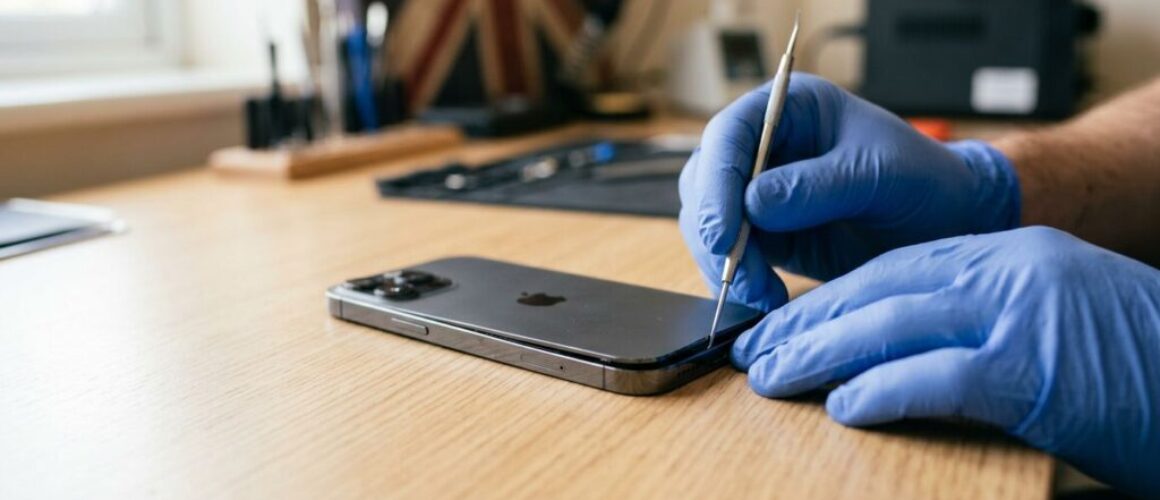
After that, the old adhesive is separated and cleared away carefully. On a bonded phone, this stage matters because rough cutting or excessive heat can deform the frame or leave residue that stops the new glass sitting properly. Once the frame is clean and level, the replacement panel is fitted with fresh adhesive and pressed into position.
What a finished repair should be checked for
A good job doesn't end when the glass looks aligned. It ends when the phone has been tested as a phone.
Look for these checks:
- Wireless charging: the handset should charge reliably without needing to be nudged.
- Camera system: lenses should be unobstructed and the rear camera should function normally.
- Audio and controls: microphones, speakers, and buttons should all respond as expected.
- NFC and close-range functions: these should be checked if the model supports them.
- Seal fit: the panel should sit flush with no lifted corners or exposed fragments.
A repair that leaves the panel slightly proud, or fails to test the phone after reassembly, is not finished properly. And while resealing helps, it does not recreate factory sealing exactly, so liquid exposure after repair should still be treated carefully. That limitation is normal, and a trustworthy provider should say it plainly rather than gloss over it.
If you're comparing services, it helps to ask whether they document the pre-repair condition, test the phone after fitting, and explain the limits of water resistance before they post the handset back.
iPhone Models and the Back Glass Repair Methods That Fit Them
Not every iPhone needs the same approach. Some models are friendlier to rear-panel work, some are more involved, and some fall into a completely different repair category. Apple's environmental report says back-glass repair is available across the iPhone 15 range, and it also notes that the redesigned chassis reduced customer back-glass repair costs by 66% for iPhone 15 Pro and iPhone 14 Pro, and by 64% for the Pro Max equivalents Apple environmental report.
How to match model to method
| iPhone model | Typical repair approach | Software completion | Structural impact |
|---|---|---|---|
| iPhone SE and pre-iPhone 12 models | Back-glass repair is often not the main route, because the model design differs | Usually not part of the rear-glass process described for newer models | Lower relevance for bonded rear-glass replacement |
| iPhone 12, 13, and similar bonded models | Rear glass is treated as a bonded repair, with controlled separation and resealing | May not require the newer calibration workflow on later models | The enclosure is reopened and resealed |
| iPhone 14 and iPhone 15 models | Back glass can be repaired, and some models may involve glass-only or enclosure-level work depending on the damage | Repair Assistant can be required on iPhone 14, iPhone 15, and later models | Structural alignment and calibration matter more |
| Pro and Pro Max variants in later generations | Repair route depends on whether the damage is glass-only or tied to the rear housing | Often more likely to need post-repair software completion | The repair can be more complex than it looks |
One important split is whether the work is glass-only or a full enclosure swap. That distinction changes the scope of the job, the amount of dismantling involved, and the amount of calibration needed afterwards. If a service page doesn't explain which route your exact model gets, it's leaving out the bit that matters most.
Why the software side now matters
Apple's current UK support material lists back glass among the parts that can require Repair Assistant on iPhone 14, iPhone 15, and later models, with the device needing to be updated and sufficiently charged before calibration Apple repair guidance. That means the repair is no longer just a physical fit-and-finish job. It can also involve software completion after the part is installed.
For a reader choosing a service, the key question is simple. Does the workshop know your exact model, the likely repair method, and whether post-repair calibration is part of the process? If the answer is vague, keep looking.
For model-specific context, this iPhone 16 Pro repair cost page is a useful example of how a repair page should identify the device before pricing it.
AppleCare, Network Insurance or Private Repair
The easiest decision is not always the best one. AppleCare+ lists accidental-damage excesses ranging from £25 to £79, and damaged back glass is included alongside damaged displays and Ceramic Shield AppleCare+ cover. Vodafone's UK insurance information says AppleCare Services claims cost £25 for screen-only or back-glass-only repairs and £50 where both screen and back glass need repair, while back-glass repair is unavailable on the iPhone SE and on iPhones released before iPhone 12 Vodafone insurance terms.
What that means in practice
Insurance can be useful, but it's not always the cleanest answer. You still need to check model eligibility, whether the damage is single-component or combined, and whether making a claim affects the rest of your cover. If the rear panel is cracked but the rest of the phone is fine, a private repair may still be the simpler route, especially if you want control over the process and the return timing.
A good private repair also gives you a more direct view of what's happening to your phone. That matters if you're worried about transit, hidden faults, or whether the phone arrives back fully tested. Phone Repair Direct, for example, offers UK-wide mail-in repairs with free tracked postage, insured transit up to £750, and a 12-month warranty on eligible repairs, which is the kind of structure that makes remote repair easier to judge trustworthy repair service guide.
How to compare the options without guessing
Use this checklist when you're choosing:
- Check policy eligibility: confirm that your exact model is covered for back-glass damage.
- Check the damage category: single panel damage and combined damage may be priced differently.
- Check the service route: decide whether you want insurer handling, postal repair, or workshop drop-in.
- Check testing and documentation: ask what gets checked before the phone is returned.
- Check what happens to your data: if privacy matters, make sure the provider is clear about prep steps.
Useful rule: if the claim process feels heavier than the repair itself, a private fix may be the calmer option.
Private repair isn't automatically cheaper for every handset, but it often wins on speed, clarity, and the amount of control you keep over the device. Insurance makes sense when the terms fit neatly. If they don't, a direct repair quote is often the more predictable route.
Repair Versus Replace and Why It Is Not Always Obvious
A cracked back doesn't just raise a repair question, it raises a decision about the phone's next life. Virgin Media O2 reported that 43% of Britons had replaced a device that could have been repaired, and 70% worried that personal data could be accessed when passing on or recycling an old smartphone phone repair industry statistics. That puts back-glass repair into a broader category than appearance.
Why replacement is not the default answer
If the screen works, the battery is fine, and the damage is limited to the rear panel, replacement usually throws away more than it solves. You lose the familiar setup, you risk data transfer headaches, and you may still end up paying more than the repair would have cost. A fixed handset also keeps its value better when it's eventually sold or traded in.
The environmental angle is not abstract either. Apple's environmental report says back-glass repair on iPhone 15 models produces 70% less greenhouse-gas emissions per repair than the comparable iPhone 14 Pro repair Apple environmental report. That's a reminder that repair and replacement aren't the same decision across generations or designs.
The decision comes down to three things
- Data: do you want to move everything to a new phone, or keep the handset you already know?
- Structure: is the rear crack isolated, or part of a wider housing problem?
- Value: will the repair preserve more of the phone's usable life than a replacement would?
A good repair doesn't pretend to be magic. It preserves the original handset, protects what's already working, and avoids forcing a full upgrade when the fault is narrow. That's why many people who first call it a “cracked back” end up treating it as a repair-versus-replace decision instead.
What a Good UK Repair Service Should Actually Do
The safest repair starts before the phone leaves your hand. Back it up if you can, switch off Find My if the provider asks for it, and photograph the phone from several angles so the pre-repair condition is recorded. If you're mailing it in, keep the packaging simple but secure, and use tracked postage rather than hoping for the best.
What to expect from the provider
A proper service should confirm the model, document the visible damage, and explain what testing will happen after repair. It should also be honest about what the repair does not restore, especially around water resistance, and it should return the handset with clear notes if any extra damage was discovered during inspection.
That's also where a provider's process tells you more than its marketing. If they use insured transit, tracked return delivery, and a documented functional test before dispatch, they're reducing risk rather than just promising speed.
A quick vetting list
- Clear intake process: they should tell you what to back up and how to prepare the phone.
- Recorded condition: they should note the damage before work starts.
- Documented testing: they should check the repaired phone before it's sent back.
- Warranty clarity: they should state what the repair warranty covers.
- Transparent pricing: the quote should match the work being done.
The broader reason this matters is simple. The UK still has about 12 million unused mobile phones stored in homes, which means a lot of working hardware never gets reused or repaired WWF e-waste report. A careful repair process helps keep another phone out of that pile.
If you want a practical checklist for choosing a workshop, this guide to a trustworthy iPhone repair service is worth using before you book anywhere.
Getting Your iPhone Back Safely and What Comes Next
A repaired phone should come back feeling normal in the hand, sitting flat again, charging properly, and free of loose shards. The main thing to remember is that a good repair restores use, not factory sealing, so you should still treat liquid exposure with care. If you've got the exact model and the damage profile clear in your head, choosing the right method becomes much easier.
For repair-specific water-resistance guidance after the job, see this UK explanation of iPhone water resistance after repair. If you're still comparing options, focus on three things, the model, the method, and whether the service documents and tests what it returns to you.
Phone Repair Direct offers UK-wide mail-in and appointment-based iPhone repair, including back glass replacement with tracked postage, insured transit, and post-repair testing. If your iPhone's rear panel is cracked, visit Phone Repair Direct to compare model-specific options and choose a repair route that fits your phone and your schedule.
– James Waterston, Device Repair Specialist at Phone Repair Direct